
[ad_1]
Pexels. Picture: Jens Johnsson
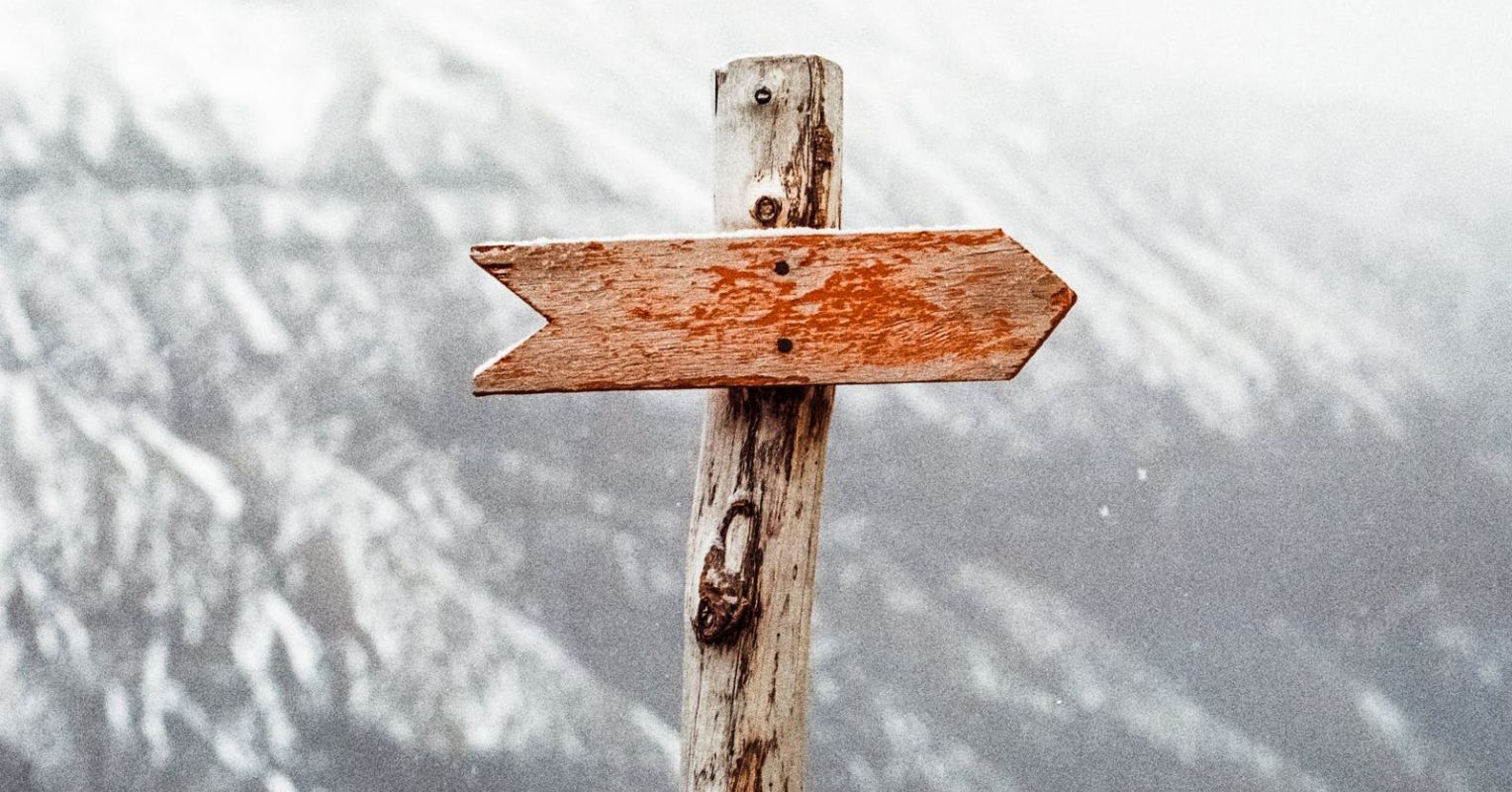
Tales of the “hero’s journey,” from Bilbo to Buddha, notify us that go away-taking is an vital, potentially the necessary process. Heroes should sooner or later go away the village or the castle, or the farmhouse in Kansas in buy to appear into their complete powers. They ought to go away behind the acquainted and strike out for The Mysterious.
But leaving the village is regarded heroic for a superior rationale, captured exactingly in a scene from the film Papillon, in which Steve McQueen and Dustin Hoffman enjoy a pair of guys attempting to escape from prison. In this scene, McQueen’s character is introduced from a long stretch of solitary confinement, in the course of which he’d gotten into the habit of counting the number of methods he could just take in any path inside of the cell, which was 5.
When they let him out, he gradually begins going for walks down the corridor, counting off the measures. On the fifth step, he stops, appears to be like about bewildered, and for the to start with time in a incredibly extended time, he requires a sixth step—on which he passes out cold.
It’s a hanging illustration of how literally too much to handle it can be to just take even a one move beyond what’s acquainted, even when what’s familiar is a jail.
But often, our life phone us to consider that sixth step. Whether it’s driven by the needs of enthusiasm, progress, authenticity, appreciate, innovation, or introspection, we get started to comprehend why, at the edges of the identified globe, the old mapmakers employed to attract monsters, dragons, and ships offshore being attacked by huge squid—which is sufficient to retain most folks in the village.
The next tale is about a go away-having I embarked on some years in the past, which taught me a few rubber-meets-the-highway classes about the heroic task of stepping into the unidentified:
In a bid for transform, adventure, and authenticity—and one thing I sensed I wanted to listen to but could not in the cacophony of city life—I had made a decision to shift, for the initially time, from the metropolis to the nation, from a suburb of San Francisco to a desert in northern New Mexico surrounded by the silence of lunar places.
The night time in advance of I was to fly there to begin home-looking, I dreamed of slipping and was flopping all around in mattress like a fish on a dock.
Traveling into Albuquerque, the aircraft strike a trough of air that pitched a glass of drinking water from the tray desk into my lap and introduced my lunch up to the mid-esophagus. The airplane’s wings flapped like the arms of a man combating for balance on a tightrope.
In the airport, I noticed an individual wearing a button that said, “Welcome to New Mexico. Land of the flea, property of the plague.” I later on learned that some of the state’s outlying areas—not much from in which I was headed—have some thing of a difficulty with fleas that carry the bubonic plague, the identical a person that killed a fourth of the populace of medieval Europe.
As I headed for baggage assert, in the again of my head, I read the words and phrases of the poet Rainer Rilke reminding me that the function of lifestyle is to be defeated by larger and higher items, and I had the uneasy sense that I’d come to the ideal area.
My very first few months living in the wilderness felt too much to handle. I scarcely remaining the dwelling for far more than a couple hours at a time and slept 12 hrs a working day. The scale of anything made a mockery of my sense of viewpoint, and the 100-mile visibilities seemed to double the measurement of the globe, generating me feel pretty little. The intractable silence of the area stored startling my reptilian brain into idle chatter. The Indian and Spanish cultures felt alien. There was hail the measurement of marbles, flash floods able of carrying off livestock and huge appliances, and thunder-like gunshots subsequent to my ear. Nothing felt acquainted.
I suppose, then, that a sense of feeling out of control made the incident with the magpie so unnerving.
I was sitting down at my desk a person afternoon a number of months after shifting, staring out the window at columns of thunderheads transferring across the sky though the wind pounded on kettledrums outside. All of a sudden a fowl flew right into the window with a bony thud and bounced off, leaving a clump of feathers stuck to the glass.
I stood up reflexively. A meadowlark lay surprised on the ground, and just at that fast, a magpie, a few occasions the meadowlark’s sizing, barreled down from a nearby tree and pecked the modest bird to loss of life as it flapped around helplessly. When it was useless, the magpie took it up to a minimal department of the apricot tree, set it there, and flew off.
I stumbled outdoors, wondering what act of carnage I experienced just witnessed. Was it the end of a chase? Some violent spasm of territoriality? Or was it, I even questioned, a mercy killing?
Four times afterwards, that clump of feathers was however stuck to my place of work window like a suicide note, and I was however rattled, not by the violence or suddenness of it, but the not-realizing, the not comprehending what it intended.
Maybe it was expanding up in a culture that doesn’t distinguish concerning uncertainty and nervousness and to which mystery is something to be solved, not serenaded. My father, for occasion, regularly read to me from a e book of “minute mysteries,” and I experienced to figure out whodunit, therefore coming to believe that that almost everything could be figured out.
Everyday living, nonetheless, and definitely the purely natural entire world, isn’t just an additional moment secret to solve, and not anything can be figured out. Nor am I any closer to experience safe in the entire world for owning plenty of solutions. Generating peace with the queries seems the superior guess. Life, right after all, ends not with an solution but a concern: what future?
Certainly, in the months immediately after I buried the meadowlark, I chose, quite uncharacteristically, to remain in suspense about what experienced took place to him when a person cell phone get in touch with to the ornithology section at the College of New Mexico could have settled the make a difference, as perfectly as my perception of uncertainty. But I did not simply call. I questioned.
One particular afternoon I even expended various hrs speculating on the lives of birds as I watched a team of gray juncos outside my house continuously flock to the floor, peck for seeds, and abruptly, as if on some invisible cue, explode into flight in each way, and then re-acquire gradually on the floor like fallen leaves.
Then 1 day, I stopped wanting to know and termed the university. Magpies, the youthful girl explained to me, are thievish and opportunistic and will consider benefit of an injured bird for the sake of an quick meal. That, she claimed with great certainty, is what I saw.
I hung up, sensation oddly unhappy. Not in the cruelty of nature but in the cruelty of certitude. The figuring out, that is, put an end to the wondering, which in lots of means was far extra entertaining and instructive. In it, there was home for creativity and discovery, for the quest implied in problem. The fact, it would seem, did not set me free of charge.
In disregarding the aged mapmakers’ warnings—in practically transferring into the unknown—I figured out that in hanging onto the common, I have what is acquainted, and in letting go, I have no plan what arrives upcoming. Lifetime turns into a cloud rolling overhead, transforming form instant by instant like a shifting Rorschach. It is a gargoyle, then a fish, then a serpent, and there’s no predicting. It is a hawk, a dancer, an airplane, a buffalo, an archer. And the only point I understood for confident about it is that I am, like the magpie, resourceful and, like the meadowlark, susceptible.
[ad_2]
Source connection