
[ad_1]
If you’ve ever listened to of creatine—a powdery nonsteroidal nutritional supplement bought in most health foodstuff stores—you probable backlink creatine to bodybuilders or weightlifters. Equally of the latter groups frequently take in creatine to raise toughness and muscle sizing. If a swole gym bro was the initially mental impression the mention of creatine conjured for you, you are correct: Creatine is arguably the most powerful legal efficiency dietary supplement for athletes1.
Despite the fact that little quantities of creatine can be acquired instantly from foods (principally fish and beef), our muscles also readily take up creatine from oral supplementation (e.g., mixing creatine in drinking h2o). Why? Mainly because muscular tissues can use creatine to generate adenosine triphosphate (ATP), the existence-enabling energy supply vital to mobile and muscular functionality. In temporary, muscle mass cells made up of extra creatine can make additional strength for pursuits this sort of as operating, jumping, and lifting. With thousands of reports supporting the basic safety and efficacy of creatine for muscle perform, creatine use by leisure and competitive athletes has been common for decades.
Mind creatine
In 19992, a paper showed anything that was at the time astonishing even to scientists: Creatine was also existing in the human brain. Further more, oral creatine intake enhanced mind creatine degrees (suggesting that at minimum some creatine passed by means of the notoriously finicky blood-brain barrier).
Like muscle mass, human brain functionality is very vitality intensive. Consequently, it makes feeling that the brain would also use creatine as a supplemental energy resource. In simple fact, research uncovered that creatine is so significant to human mind operate that the mind even synthesizes its very own creatine.
The awareness that creatine was a bioactive material in the brain impressed a new generation of research thoughts: Could creatine supplementation, demonstrated to enhance muscle mass purpose, also boost brain operate? If so, which brain capabilities and men and women are most probably to benefit?
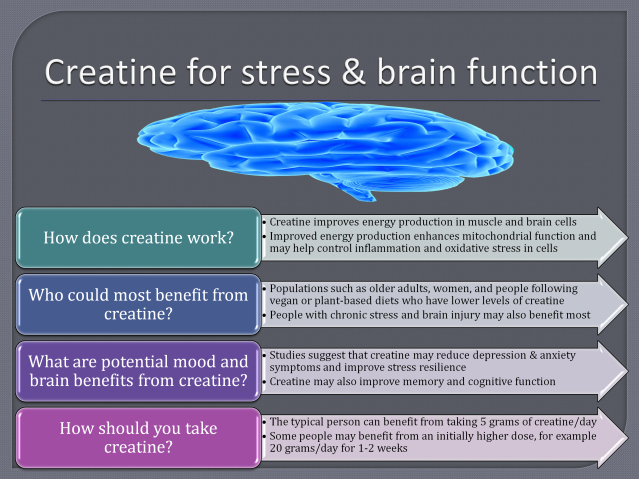
With almost two a long time of creatine analysis on mind perform now entire, the first results look promising (see Determine 13):
Source: Thomas Rutledge
- A 2023 systematic assessment and meta-assessment of placebo-controlled clinical trials indicated that creatine supplementation reasonably improved memory function in healthful adults4. Memory gains explained in this evaluation ended up, on common, much larger for older older people and more compact for youthful adults.
- There is some proof from creatine testimonials that supplementation may well be extra beneficial for persons suffering from acute/continual stress or who take in more compact amounts of creatine by means of diet (e.g., vegans and vegetarians)3.
- Since panic, PTSD, and despair indications are linked with metabolic dysfunction and impaired electricity degrees in the brain—mechanisms improved by creatine—it is plausible that creatine supplementation can be valuable5. Populace research reliably exhibit better depressive indications amid persons with decreased creatine levels. Original human creatine interventional trials reveal smaller to moderate symptom enhancements for persons with these psychological health and fitness situations.
- Animal scientific studies and first human trials furthermore indicate prospective benefits of creatine supplementation in people with gentle traumatic brain injuries (mTBI)3. Impaired metabolic operate is a frequent side impact of TBI. This process could potentially be improved by better creatine intake.
- At this position, the optimum dosing schedule (i.e., how much creatine/how frequently to choose/how lengthy to get) for brain positive aspects continues to be unclear. Most brain creatine trials borrow from protocols set up for studies tests creatine for actual physical effectiveness, the place reliable regimens of 5 grams of creatine/day are consumed or “pre-loading” regimens of 10-20 grams of creatine/working day for 1-2 months adopted by a 5-gram/day “servicing” dose are applied.
Summary
As soon as limited to populations trying to get much better athletic general performance, creatine has appear total circle as a wellbeing supplement. Even though added scientific trials are demanded to optimize dosing designs and to recognize people most very likely to profit, evolving creatine exploration is showing assure as a complement possibly handy for a variety of temper and cognitive indications.
*As with all overall health dietary supplements, if you are thinking about creatine use, favor models that post to 3rd-party screening to assure products excellent. There is also no scientific basis to use any kind of creatine for mind wellness other than creatine monohydrate—the least expensive and most demonstrated kind of creatine (other sorts of creatine are much more high-priced and might not present the identical consequences6).
[ad_2]
Supply hyperlink